





How a Mystic, the Spy Agency, and a Political Party Orchestrated Imran Khan’s Rise and Fall Exclusive Investigation Reveals the Occult Mechanics Behind Pakistan’s Political Theatre
ISLAMABAD
Pakistan’s politics has always flirted with the surreal, but between 2016 and 2022 the country lived through an episode so bizarre it could have been scripted by Netflix on absinthe. A cricketing legend convinced he was chosen by God. A veiled woman who spoke with spirits and swayed cabinets. An intelligence agency that manufactured miracles on an industrial scale. And at the centre of it all: a secret psychological operation designed not just to install a prime minister, but to reprogram his very perception of reality.
This is the true story of how Pakistan was governed—briefly, catastrophically—by a trinity of the Cricketer, the Mystic, and the Spy.
Part I – The Broken Dreamer
By early 2016, Imran Khan was finished.
- 1997–2013: Four elections, countless rallies, one seat in 2002, 28 in 2013. Still a distant third. In Punjab, the province that decides prime ministers, PTI remained a joke.
- 2007: Beaten and chased off stage at Punjab University by IJT activists; bloodied footage played on loop for years.
- 2014: 126-day dharna in Islamabad ends in nothing but memes.
- Long marches announced, long marches cancelled. Civil disobedience calls ignored. Trains kept running.
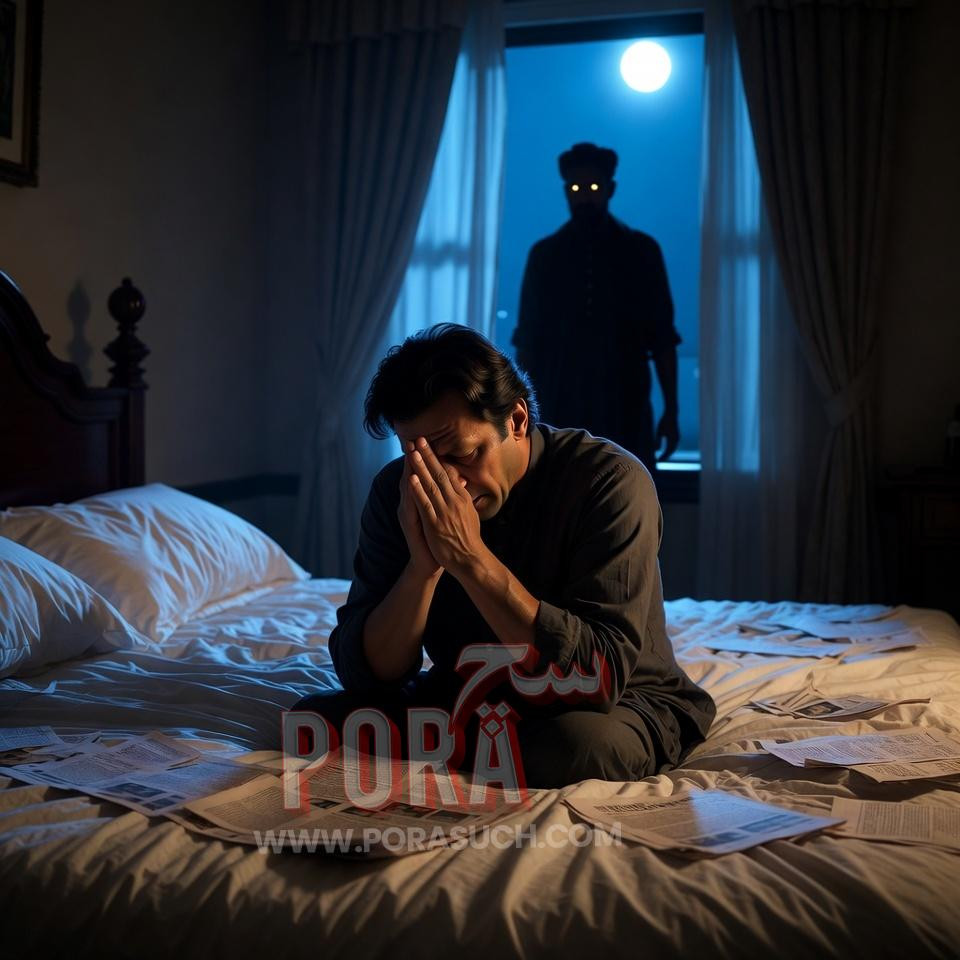
Journalists laughed openly. “He’ll marry a third time before he becomes PM,” went the standard joke. His second marriage had collapsed. PTI was broke. Rallies were half-empty. Friends whispered he should quit. Aides recall a man obsessively rereading Rumi and asking the same question: “Why has destiny abandoned me?” It was the lowest point of his life.
Part II – Operation Qismat: Manufacturing Miracles
The army, under General Qamar Javed Bajwa, had been watching. Khan was popular, anti-establishment in rhetoric, yet naïve and controllable. He was perfect raw material—if he could be made to believe that every twist of fate was divine will.
And it was exactly then, in those nights of total despair, that the phone calls to a veiled woman in Pakpattan began, calls that would drag him out of political oblivion and straight into the mystic’s web that now holds him behind bars.
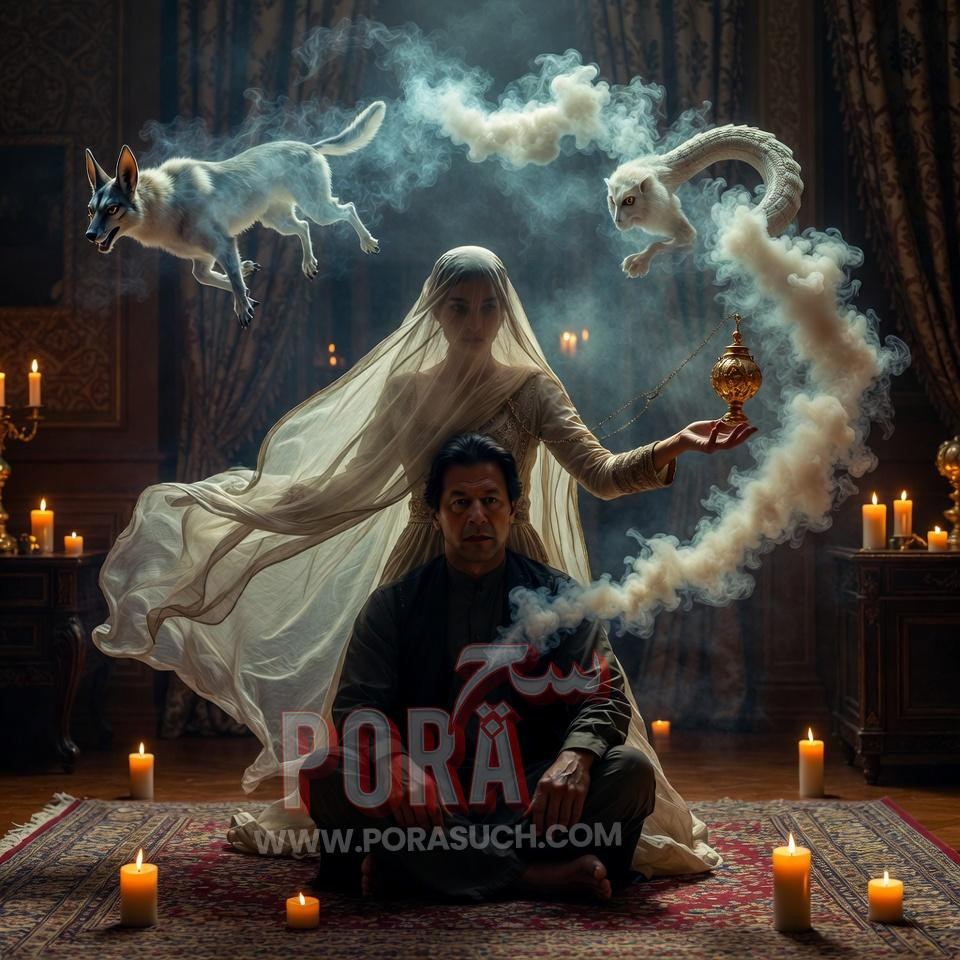
Enter the first puppet master: a shadowy Pir with burning eyes and a reputation for “opening locked destinies.” Introduced through trusted intermediaries, the Pir began regular midnight sessions with Khan. Strange rituals followed—smoke-filled rooms, Quranic verses written on deer skin and dissolved in water, dreams dissected like battlefield maps. The Pir assured Khan that dark forces—always conveniently the same political rivals—were blocking his path. Remove them, he whispered, and paradise awaits.
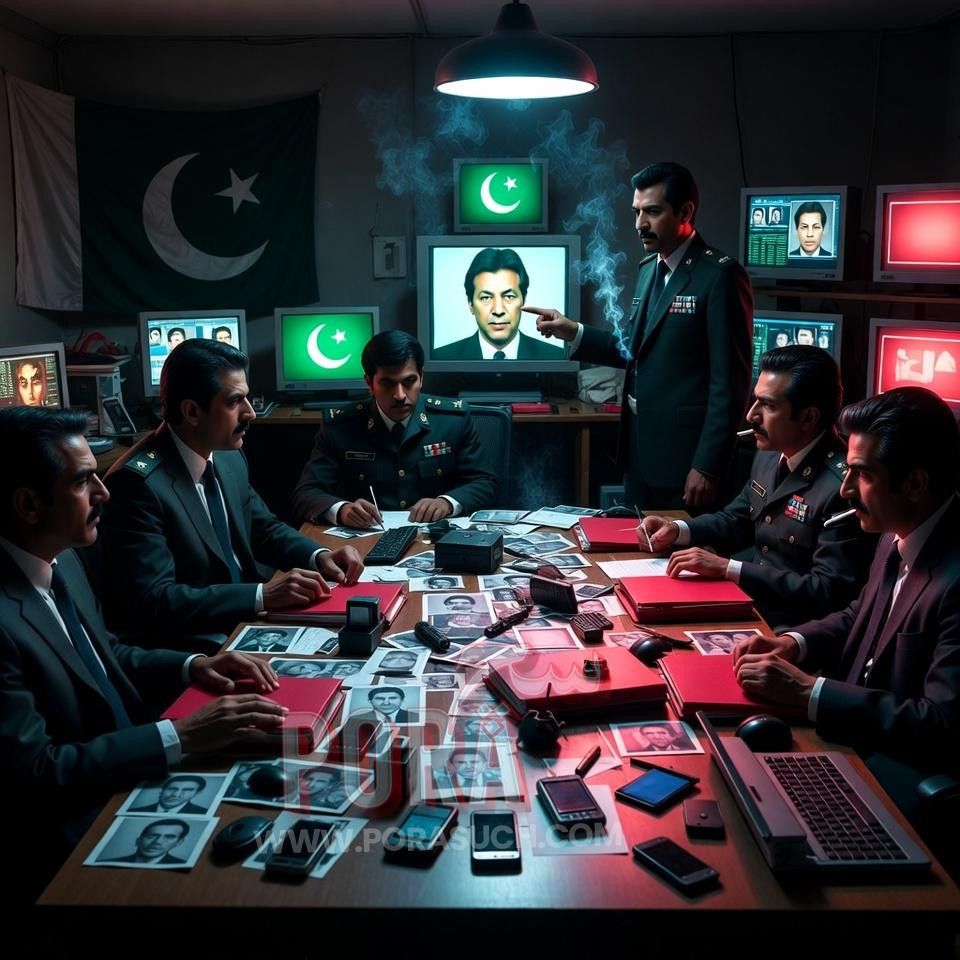
Deep inside headquarters in Islamabad, a small cell worked under the codename “Operation Qismat.” Its sole mandate: create prophecies that always came true.
The method was brutally elegant. The Pir would predict, on a precise date, that a certain minister would be caught in a corruption scandal, or that a Supreme Court petition against Nawaz Sharif would suddenly be accepted. ISI officers, with their tentacles in every institution, made sure the prophecy was fulfilled on schedule. When the news broke, Khan would stare in awe: “Exactly as he said—down to the hour!”
Each fulfilled prophecy tightened the noose of belief. Khan stopped questioning the source. He began describing the Pir as “my spiritual GPS.”
Enter the Mystic: The Making of Bushra Bibi
In the chaotic theatre of Pakistani politics, few entrances have been as dramatic, or as consequential, as that of Bushra Maneka, later known to the nation as Bushra Bibi.
She was, on paper, an unremarkable woman from a land-owning family in central Punjab: married for nearly three decades to a customs officer named Khawar Maneka, mother of five, living quietly in the shadow of the ancient Sufi shrine town of Pakpattan. Yet beneath the ordinary façade lay an intense engagement with Sufism. Friends and neighbours sought her out for spiritual advice, amulets, and whispered interpretations of dreams, an entirely normal practice in rural Punjab, except that it was a woman holding court.
The introduction was orchestrated by her elder sister Maryam Raza Wattoo, a fiercely patriotic PTI volunteer then living in the UAE. Maryam had come to admire Imran Khan’s anti-Western rhetoric, his calls for an Islamic welfare state, and his outsider swagger. She believed her younger sister, quiet, devout, and reputed to possess barakah, could offer the spiritual grounding the struggling politician desperately needed.
The first contact was a phone call in late 2016. Khan, restless and searching for divine signs after years of political setbacks, asked for guidance. Bushra’s initial response was firm: “I do not meet men outside my immediate family.” Khan persisted. Eventually she relented, but only over the telephone, and only to speak of faith.
Those nightly conversations stretched for hours. What began as discussions of Rumi and Ibn Arabi soon drifted into politics and destiny. Khan confessed his loneliness, his fear that history would remember him as a failed dreamer. Bushra spoke softly of trials sent to purify the chosen, of a leader who would one day cleanse the nation.
In 2017 she separated from Khawar Maneka amid bitter accusations over the Islamic waiting period (iddat), a technicality that would later fuel endless scandal. Seven months later, in a small, almost secret ceremony in Lahore, she became Imran Khan’s third wife.
Pakistan woke up to headlines it could scarcely process: the former playboy cricketer, the self-styled reformer, married to a veiled spiritual healer who until yesterday had been someone else’s wife. The nation reeled. Memes exploded. Clerics thundered about iddat violations. PTI workers, many of every sect and temperament, suddenly found themselves defending a “Pirni First Lady.”
Almost immediately the whispers began: cabinet appointments were being run past her. Billionaires were banished because she “felt darkness” around them. Election strategy was adjusted according to her dreams. And in the hilltop mansion of Bani Gala, black goats began arriving after dark.
A private woman had stepped onto the public stage, and with that single step she altered the trajectory of a nuclear-armed nation. The cricketer had found his oracle. The establishment had found its perfect conduit. And Pakistan, whether it liked it or not, had acquired its most enigmatic and powerful First Lady in history.
The mystic had entered the arena, and nothing would ever be the same again.

Part III – The Oracle of Bani Gala
In late 2016 the Pir announced a new phase: he was stepping back. From now on, divine messages would arrive through a woman of rare purity—Bushra Bibi.
Bushra entered the stage like a character from a Sufi legend: veiled, soft-spoken, claiming direct communion with the Prophet Khizr (the invisible green saint of Islamic lore). She rapidly became the final arbiter of everything. Cabinet appointments were run past her. Foreign trips were postponed if she “felt negative energy in the stars.” Billionaire backers who had poured hundreds of millions into PTI were excommunicated because she dreamed they carried “the shadow of betrayal.”
And the rituals grew darker.
Former household staff—drivers, cooks, security men now scattered in exile—still speak in hushed tones of what they witnessed on the hilltop:
- Black goats slaughtered at midnight, their livers examined for “signs.”
- Raw meat circled seven times above the prime minister’s head to break curses supposedly cast by his ex-wives.
- Eggs cracked over photographs of political enemies while verses were recited backwards.
- A locked basement room in Bani Gala where, on new-moon nights, incense so thick it stung the eyes masked stranger smells.
One ex-aide swears he once saw a high-ranking ISI officer, still in uniform, waiting barefoot outside the prayer room while Bushra finished a “consultation with the unseen.”
Part IV – The State as Séance
By 2019 Pakistan had become the world’s first occult democracy. Policy was not debated in cabinet; it was revealed after dreams. When Bushra declared that a certain chief minister “carried the energy of Iblis,” he was gone within days. When she insisted the Kashmir policy needed “spiritual cleansing” before diplomatic moves, files gathered dust for months.
The beauty of the arrangement, from the military’s perspective, was its deniability. Generals could issue orders through a woman who spoke to spirits. If anything went wrong, the prime minister—not the army—had listened to a mystic. Perfect insulation.
Part V – The Day the Miracles Stopped
The system worked until the music stopped.
In late 2021 General Bajwa decided Khan had outlived his usefulness. The tap of miracles was turned off. Suddenly Bushra’s dreams went dark. Predictions failed. Allies deserted. The no-confidence vote that toppled the government in April 2022 was the ultimate unfulfilled prophecy—an event Bushra had confidently declared “impossible in this cosmic cycle.”
When the audio leaks surfaced—Bushra, in a very un-mystical voice, haggling over cabinet posts and media plants—the spell shattered. The oracle was revealed as all too human.
Epilogue – Prisoners of the Illusion
Today Imran Khan languishes in Attock Jail, repeating to visitors that everything was God’s plan. Bushra Bibi, in a separate wing of Rawalpindi’s Adiala, still receives visitors who kiss her hand and ask for blessings.
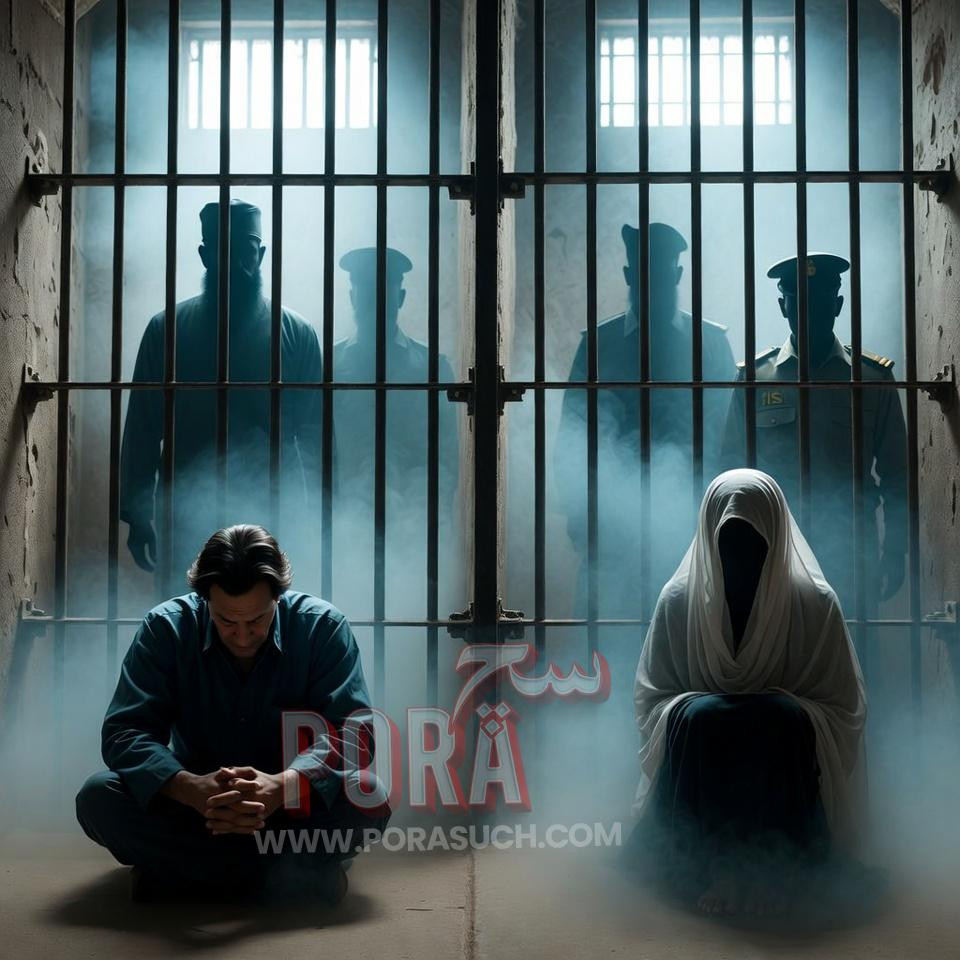
The Pir has vanished—some say to a quiet retirement in Canada, others to a shrine in interior Sindh. Operation Qismat files, insiders claim, were shredded the day General Bajwa hung up his uniform.
Yet the question lingers in Islamabad’s smoke-filled drawing rooms: who was really pulling the strings? The woman who claimed to speak with angels? The generals who scripted her lines? Or the cricketer who so desperately wanted to believe he was chosen by heaven that he handed a nuclear-armed nation to whoever fed the illusion best?
In Pakistan’s endless game of thrones, the final twist is this: sometimes the most powerful weapon is not a tank or a ballot box.
It is faith—carefully, ruthlessly weaponised.