






The arc of the moral universe is long, but on Friday, April 24, 2026, in a rural hideout in the Ghab Plain, it bent sharply toward justice. The arrest of Amjad Youssef, a former Major in the notorious Branch 227 of Syria’s Military Intelligence, marks the end of a thirteen-year run for one of the most documented war criminals of the 21st century.
Youssef’s crimes were not merely whispered rumors of war; they were broadcast to the world in a chilling leak that redefined our understanding of state-sponsored depravity. Today, as he sits in a transitional cell being interrogated by the very country he once terrorized, we look back at the blood-soaked legacy of the Tadamon Massacre.
I. The Killing Fields of Tadamon (April 16, 2013)
To understand the weight of Youssef’s arrest, one must return to a spring morning in 2013. The Tadamon neighborhood in southern Damascus was a jagged frontline. The Assad regime was fighting for survival, and the “security” forces were instructed to send a message that would resonate through the bones of every Syrian citizen.
The Pit of Death
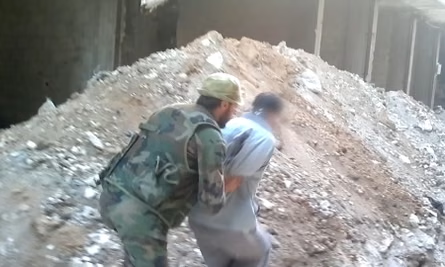
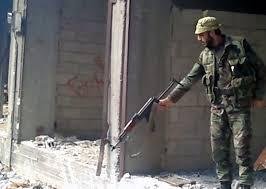
On Daaboul Street, near the Othman Mosque, a pit had been dug. It wasn’t a grave; it was an execution chamber. Under the direction of Amjad Youssef, intelligence officers began rounding up civilians from nearby checkpoints. These were not combatants. They were shopkeepers, students, and fathers—people who had stayed in Tadamon believing the regime’s promise of protection.
The Methodology of Terror
The leaked footage, which emerged years later, revealed a ritualistic cruelty:
-
The Blindfolds: Victims were led to the edge of the pit with their eyes taped shut or wrapped in plastic.
-
The Deception: Youssef and his subordinates mocked the victims. Some were told they were being moved to safety; others were told to run to avoid a “sniper” that didn’t exist, only to find the pit beneath their feet.
-
The Execution: As they stumbled, Youssef would fire his assault rifle. One by one, 41 men fell into the heap.
-
The Erasure: To ensure no evidence remained, tires were thrown onto the bodies and doused with fuel. The pyre burned for hours, a literal attempt to turn human lives into ash and silence.
II. The Investigation: “Anna Sh” and the Digital Trap
The world might never have known Youssef’s name if not for a series of extraordinary events involving a whistleblower and two academics in Amsterdam.
The Whistleblower’s Burden
A young recruit for a pro-government militia accidentally discovered the footage on a laptop. Horrified by what he saw—the laughing, the smoking, and the casual murder—he risked his life to leak the data. That video eventually reached Annsar Shahhoud and Prof. Uğur Ümit Üngör at the University of Amsterdam.
The “Anna Sh” Persona
Realizing that a direct approach would never work with a seasoned intelligence officer, Annsar created a digital alter ego: Anna Sh. She presented herself on Facebook as a fanatical supporter of the Assad regime, a young Alawite woman enamored with the “heroism” of the security forces.
For two years, she navigated the dark social circles of Syrian war criminals. She spoke to over 200 officers, building a rapport, listening to their “burdens,” and acting as a digital confessor.
The Confrontation
In 2021, she finally lured Amjad Youssef into her web. In a series of video calls, the “Butcher” began to crack. He spoke of the death of his brother and admitted to the murders.
“I killed a lot,” he told her, his face illuminated by the glow of his phone. “I took revenge.”
When Annsar finally revealed her true identity and sent him the 14-second clip of his own crimes, Youssef’s defiance was chilling: “I am proud of what I did.”

III. The Sectarian Dimension: The “Alawite” Executioner
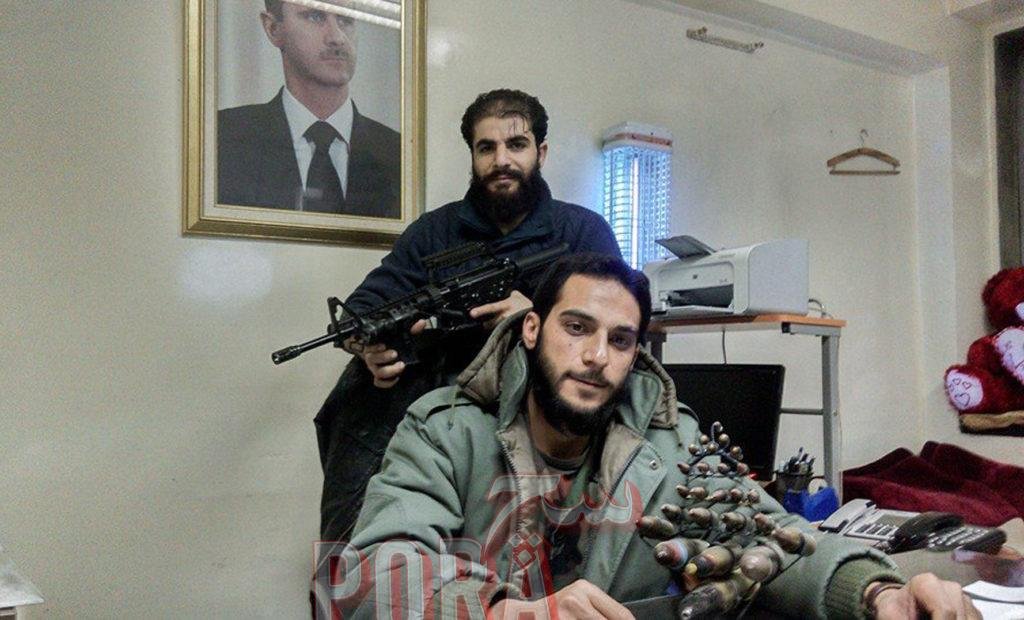
Amjad Youssef’s actions cannot be divorced from the sectarian fire that consumed Syria. As a member of the Alawite sect—the same as the ruling Assad family—Youssef saw himself as a praetorian guard.
His brutality was fueled by a twisted sense of “protection.” In his mind, every Sunni civilian in Tadamon was a potential threat to his community’s existence. This radicalization turned a military intelligence officer into a genocidal enforcer. He didn’t just kill to win a war; he killed to cleanse a neighborhood and instill a “pedagogy of fear” that would last for generations.
IV. The Fall of the Regime and the Great Manhunt
When Bashar al-Assad fled to Russia in December 2024, the shield of state protection vanished. Youssef, knowing he was a marked man with his face plastered across international news since the 2022 Guardian report, went into the shadows.
The Reward
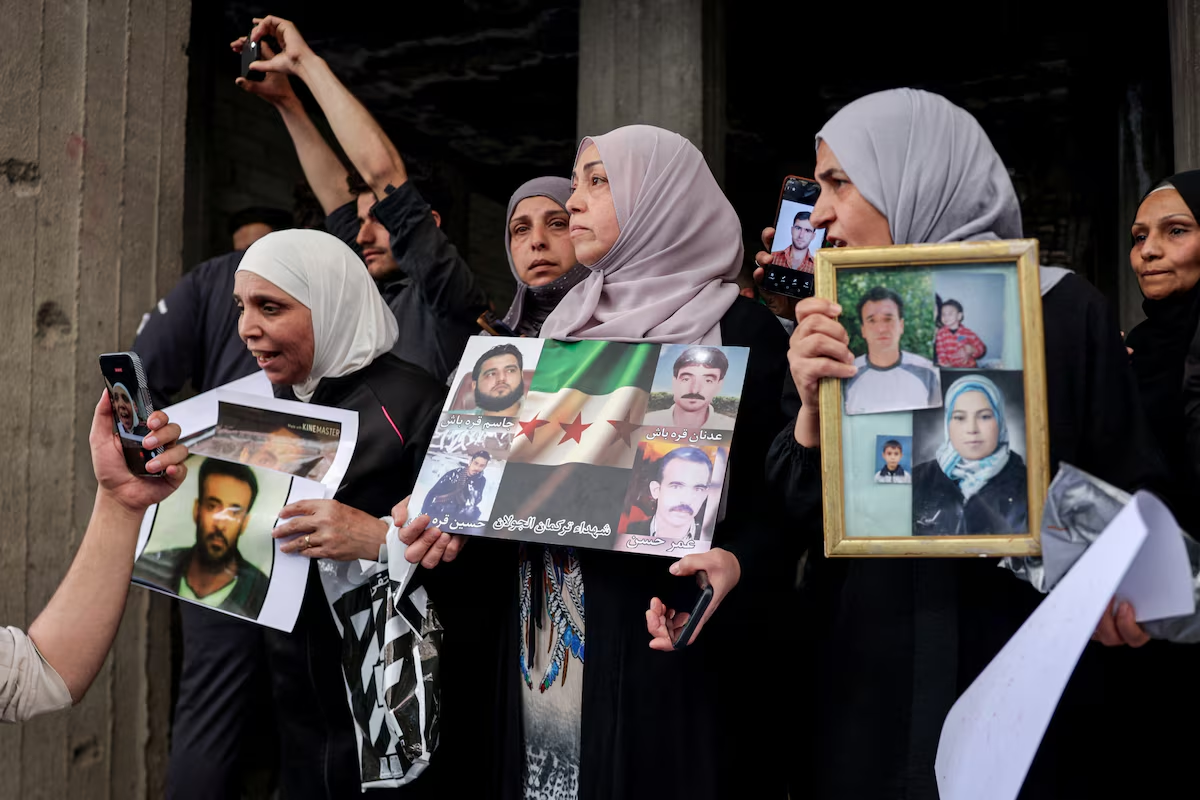
The transitional government, led by President Ahmad al-Sharaa, made Youssef a “Priority One” target. A public fundraising campaign was launched by the citizens of Damascus—families of the disappeared—offering a massive reward for information leading to his capture.
The Arrest (April 24, 2026)
Following a tip-off and months of surveillance in the Hama Governorate, special security forces moved in. Youssef was found hiding in a rural area, a far cry from the powerful Major who once decided who lived and died in the capital.
V. The Interrogation: “Don’t You Have a Heart?”
The images released yesterday by the Ministry of Interior are a powerful symbol of a changing Syria. Interior Minister Anas Khattab confronted Youssef in a stark interrogation room.
The exchange was brief but haunting:
-
Khattab: “Don’t you have children?”
-
Youssef: (Subdued) “I have a daughter and a son.”
-
Khattab: “To attack people this way, don’t you have a heart? This shows a lack of humanity.”
For the victims’ families, seeing Youssef—once an untouchable titan of terror—looking small and defeated in a chair is the first step toward healing.
VI. Why This Matters for the Future of Syria
The case of Amjad Youssef is a litmus test for the new Syrian administration.
-
Accountability: It proves that “just following orders” is no longer a valid defense.
-
Evidence: The Tadamon video is one of the most “perfect” pieces of evidence in the history of war crimes—showing the perpetrator, the victim, and the act all in one frame.
-
National Reconciliation: By prosecuting Youssef, the transitional government signals that the era of the Mukhabarat (secret police) state is over.
Amjad Youssef thought the fire he lit in that pit in 2013 would consume the truth. He was wrong. The very technology he used to document his “pride” became the rope that eventually pulled him into a court of law.
The 288 victims of Tadamon cannot be brought back, but as Youssef prepares to face a judge, their names are finally being whispered with the hope of justice. The Butcher of Tadamon is no longer a ghost; he is a prisoner, and the world is watching.
#TadamonMassacre #JusticeForSyria #AmjadYoussef #WarCrimes #SyriaTransitionalGovernment